Welcome to KRF Precision Co., Ltd.


What Matters Most When Selecting TCT and Cermet Cold Saw Blades?
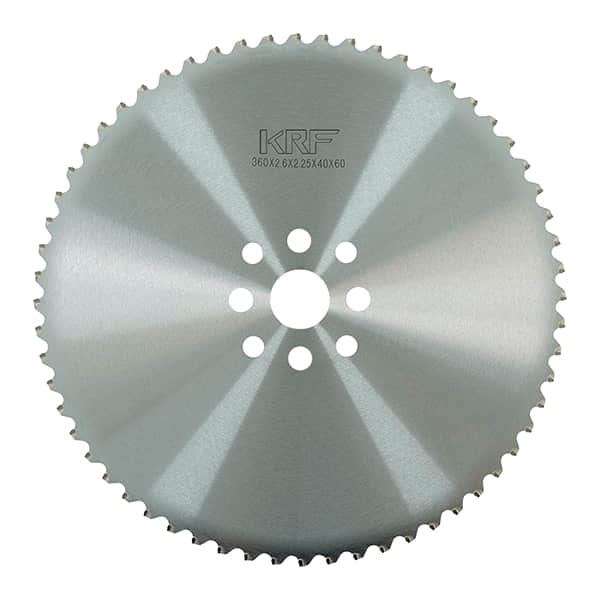
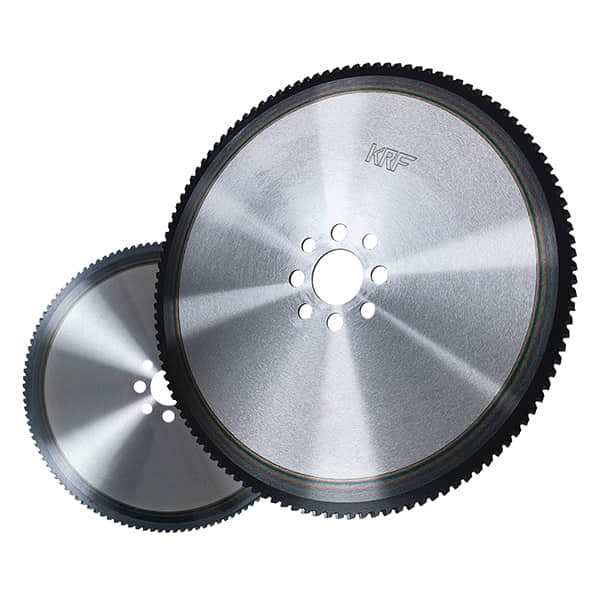
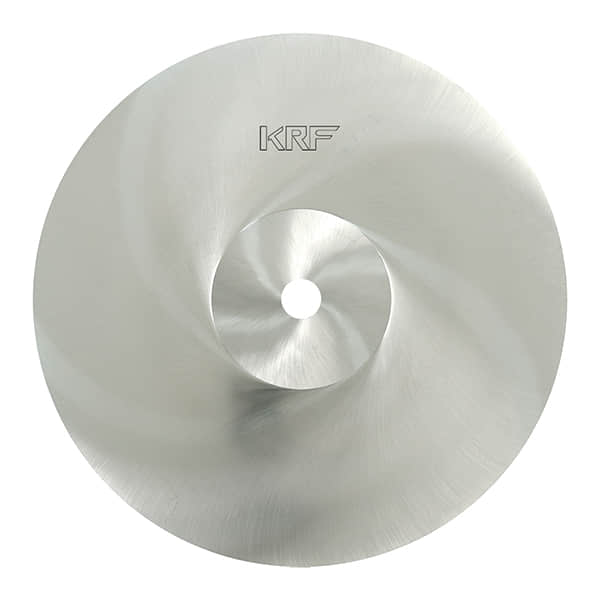
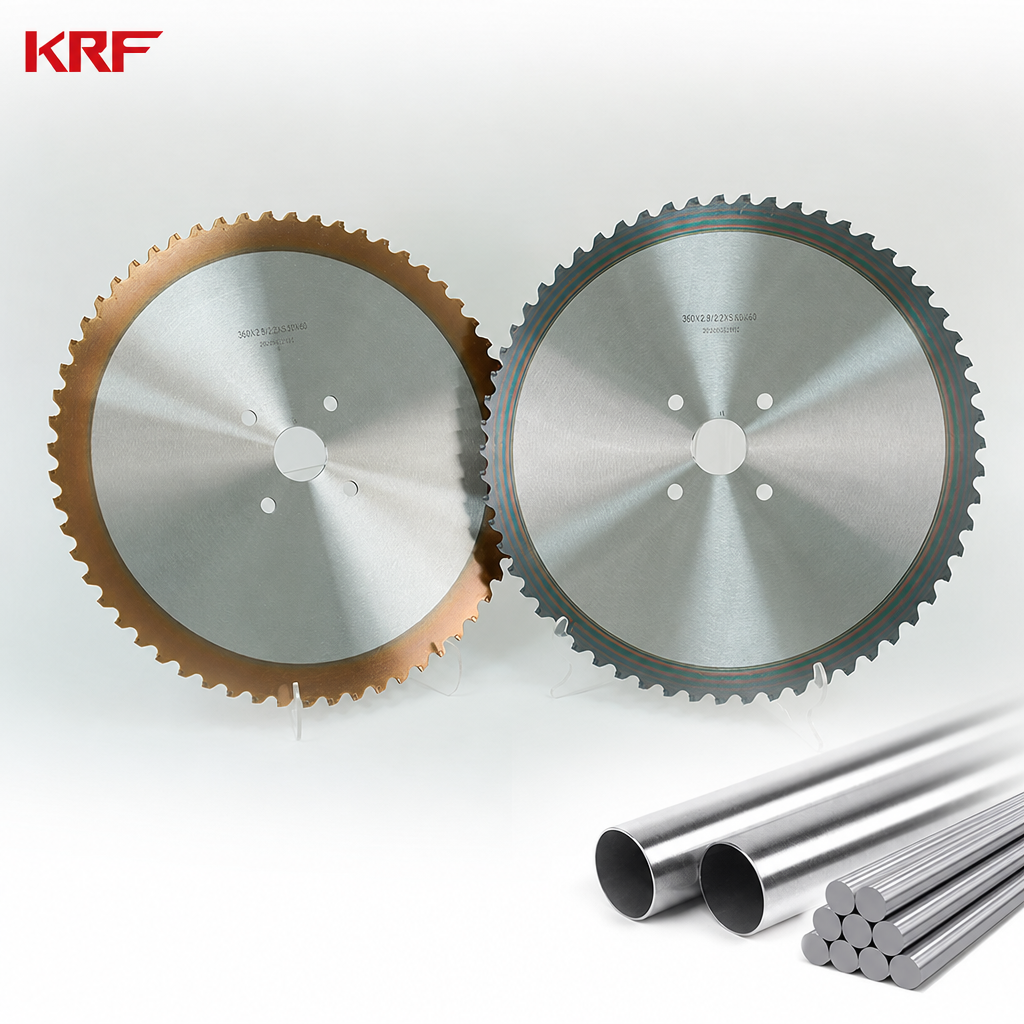
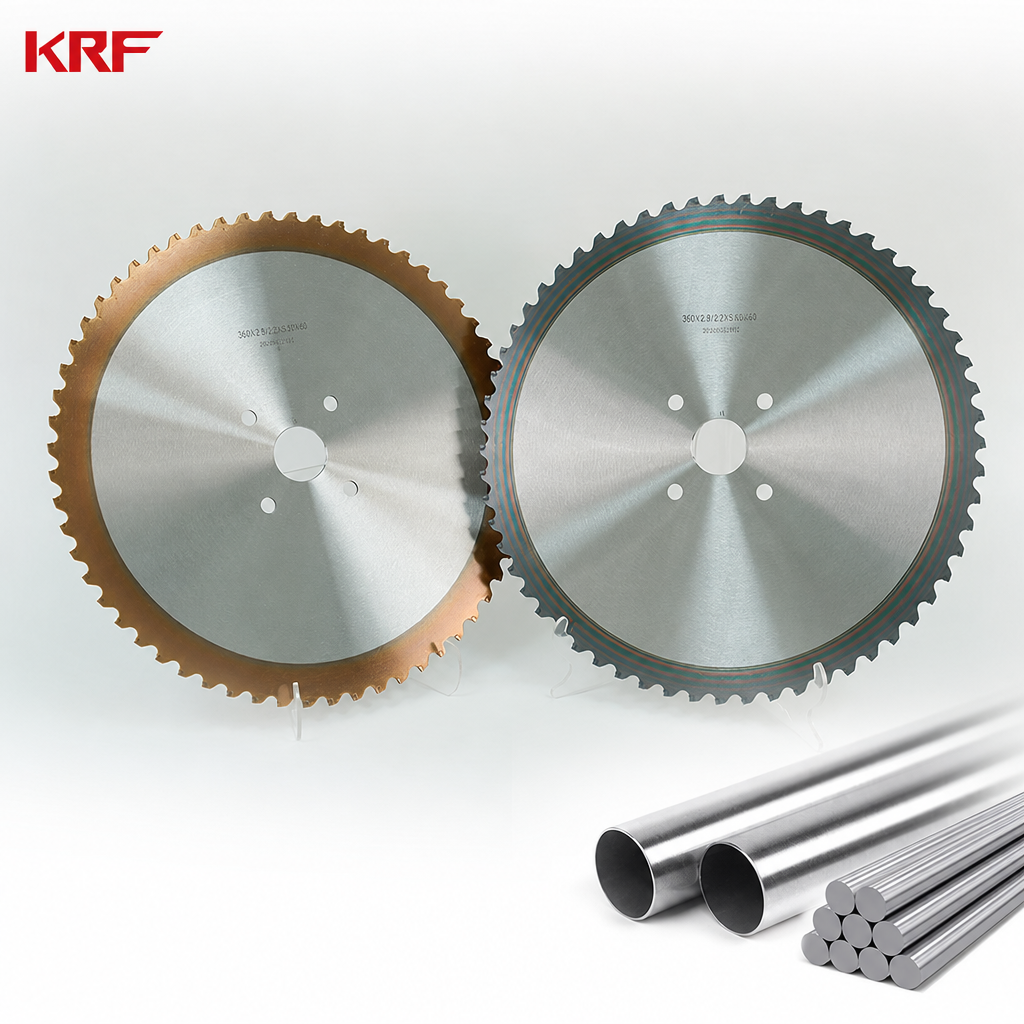
TCT and Cermet cold saw blades are widely used for industrial metal cutting where blade life, cutting quality, productivity, and process stability are important.
When selecting a cold saw blade, diameter, thickness, bore, and tooth count are important specifications, but they do not tell the complete story.
Actual cutting performance is influenced by the combination of cutting tip material, blade body, manufacturing precision, coating, machine conditions, and the material being cut.
For this reason, evaluating a cold saw blade from the perspective of the complete cutting application is often more useful than comparing specifications or purchase prices alone.
Blade Life and Cost per Cut
For industrial users, blade life is one of the most important indicators of actual blade performance.
Depending on the application, blade life can be evaluated by:
Number of cut cross-sections
Number of cuts
Number of workpieces
However, purchase price alone does not necessarily reflect the actual cost of using a saw blade.
For example, if one blade costs USD 60 and produces 4,000 cuts, the blade cost is approximately:
USD 60 ÷ 4,000 cuts = USD 0.015 per cut
If another blade costs USD 80 but produces 7,000 cuts:
USD 80 ÷ 7,000 cuts ≈ USD 0.0114 per cut
Although the second blade has a higher purchase price, its cost per cut is lower in this example.
For continuous production, longer blade life can also reduce blade replacement frequency, machine downtime, and associated labor. Therefore, cost per cut and overall production performance can provide a more meaningful basis for evaluating a cold saw blade than purchase price alone.
What Determines Cold Saw Blade Life?
Blade life is not determined by one factor. For TCT and Cermet cold saw blades, several aspects of the blade and cutting process work together.
Cutting tip material and grade
Blade body material and heat treatment
Brazing quality
Grinding precision
Coating
Blade flatness and runout
Cutting conditions
Material being cut
The balance between wear resistance and toughness is particularly important. A cutting material with high hardness may provide good resistance to wear, but the blade also needs sufficient toughness when cutting materials or applications involving impact, vibration, or interrupted cutting.
The blade body is equally important. Its flatness, dimensional stability, internal stress, and runout can influence cutting stability and the service life of the cutting tips.
This means that a high-quality cutting tip alone cannot guarantee high overall blade performance. The complete blade structure and manufacturing process need to work together.
Cutting Stability and Cutting Quality
Blade life is only one part of the evaluation. For many industrial applications, the quality and consistency of the finished cut are equally important.
Typical requirements include:
Low burr formation
Consistent cut surface
Good squareness
Dimensional accuracy
Stable cutting behavior
Excessive vibration or blade runout can negatively affect both cutting quality and blade life.
Cutting stability is influenced by the relationship between the blade, machine, material, and cutting parameters.
Blade + Machine + Material + Cutting Parameters
For this reason, a blade that performs well under one set of conditions may produce different results when used on another machine or material.
A proper blade evaluation should therefore consider the complete cutting environment rather than the blade specification alone.
TCT or Cermet Cold Saw Blade?
TCT and Cermet are both used for industrial metal cutting, but their characteristics are different. The appropriate choice depends on the material, machine, cutting speed, production requirements, and cutting conditions.
TCT Cold Saw Blades
TCT, or tungsten carbide tipped, cold saw blades use carbide cutting tips mounted on a steel blade body.
They can provide a useful balance between wear resistance, toughness, impact resistance, and cutting performance.
TCT blades are widely used for steel tubes, profiles, bars, and various metal cutting applications. The appropriate carbide grade should be considered according to the material and actual cutting conditions.
Cermet Cold Saw Blades
Cermet cutting materials combine ceramic and metallic characteristics and are used in applications where wear resistance, thermal performance, and cutting efficiency are important.
Cermet blades can be suitable for a range of steel and metal cutting applications, particularly where stable cutting conditions are available.
However, Cermet selection also needs to consider machine stability, workpiece characteristics, and cutting conditions.
Therefore, the choice between TCT and Cermet should be based on the actual application rather than simply the material name of the cutting tip.
Why Coating Matters
Coating can play an important role in the performance of TCT and Cermet cold saw blades.
Depending on the coating system and application, coating technology can influence:
Wear resistance
Friction behavior
Thermal performance
Surface protection
Tool life
However, coating should not be considered separately from the rest of the blade.
Cutting Tip Material + Blade Body + Surface Preparation + Coating + Cutting Conditions
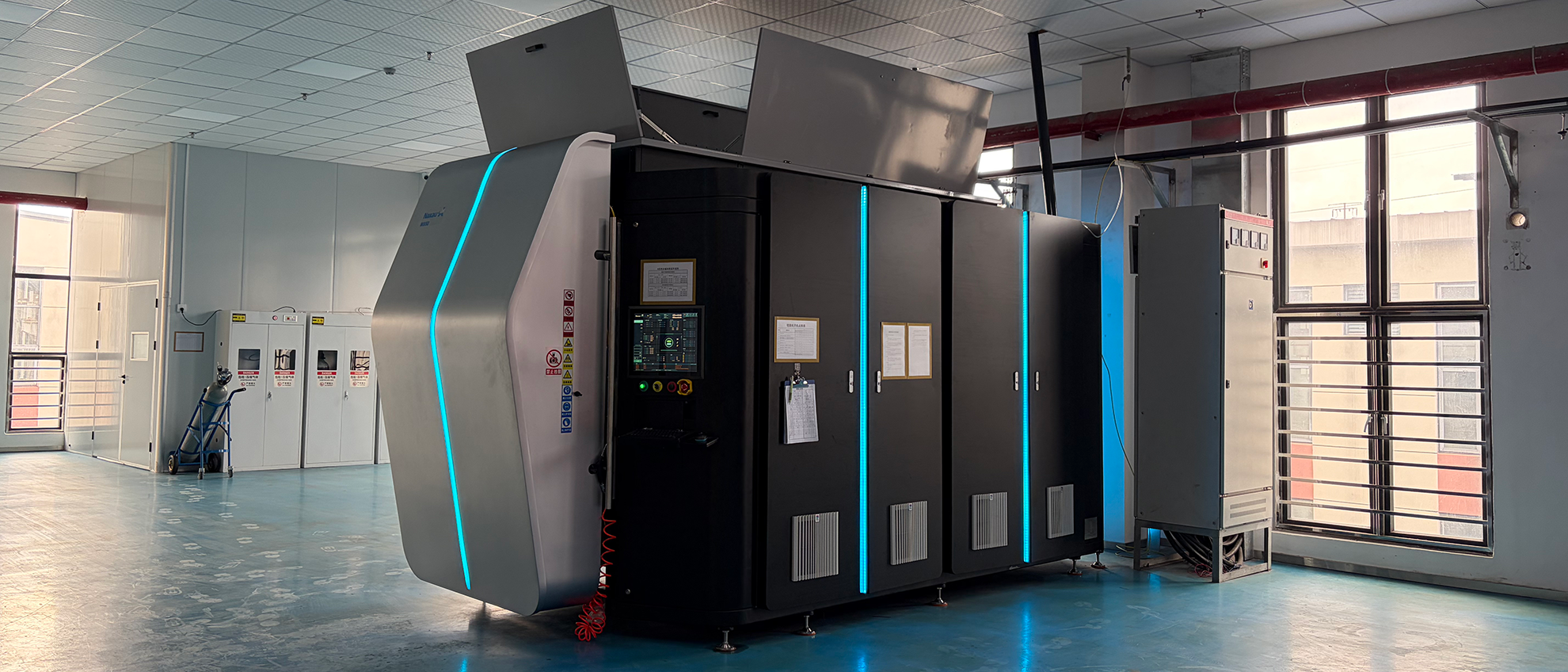
Stable coating deposition and consistent surface treatment are therefore important parts of overall blade manufacturing quality.
For demanding applications, coating performance needs to be considered together with the substrate material and actual cutting conditions.

Manufacturing Consistency Matters
For industrial users, one good blade is not enough. The performance of repeated production batches also needs to remain consistent.
Important manufacturing stages include:
Raw Materials
↓
Blade Body Manufacturing & Heat Treatment
↓
Cutting Tip Brazing
↓
Grinding
↓
Surface Treatment & Coating
↓
Final Inspection
Each stage can influence final cutting performance.
Consistency in blade diameter, thickness, flatness, runout, cutting tip positioning, grinding accuracy, coating quality, and other critical dimensions helps provide more predictable performance from blade to blade.
This is particularly important for customers using saw blades in continuous production, where unexpected changes in blade performance can affect production efficiency.
Choosing a Cold Saw Blade Based on the Complete Application
A blade specification provides important information, but it does not completely determine whether a blade is suitable for a particular application.
For a more meaningful technical evaluation, several basic parameters are useful:
| Parameter | Information |
|---|---|
| Material | Steel grade / tube material |
| Material Dimensions | Outside diameter / wall thickness / profile size |
| Blade Diameter | e.g. 285 / 360 / 460 mm |
| Blade Thickness | Plate thickness / kerf |
| Bore | Bore diameter |
| Tooth Count | Number of teeth |
| Machine | Machine model |
| RPM | Spindle speed |
| Cutting Speed | m/min |
| Feed Rate | mm/min |
| Current Blade Life | Number of cut cross-sections / number of cuts / number of workpieces |
| Cutting Quality | Burr / surface / squareness |
These parameters make it possible to evaluate the relationship between the blade and the actual production conditions.
For example, a 360 mm blade with 80 teeth may perform differently depending on whether it is cutting thin-wall tubing, heavy-wall tubing, solid bar, or another material, even if the nominal blade specification remains the same.
Therefore, blade selection is ultimately an application-matching process.
A Complete View of Cold Saw Blade Performance
The performance of a TCT or Cermet cold saw blade is influenced by several interconnected factors:
Cutting Tip Material + Blade Body + Manufacturing Precision + Brazing Quality + Grinding Accuracy + Coating + Dimensional Accuracy + Cutting Parameters + Quality Control
No single specification determines the complete performance of a cold saw blade.
A suitable blade needs to match the material, machine, production requirements, and cutting conditions.
This is also why technical communication between the blade manufacturer and the end user can be valuable when a cutting application involves demanding production requirements.
Conclusion
Selecting a TCT or Cermet cold saw blade should involve more than comparing purchase prices or basic blade dimensions.
Blade life, cost per cut, cutting quality, cutting stability, productivity, coating performance, and manufacturing consistency all contribute to the actual value of a saw blade.
The most useful starting point is often the cutting application itself:
What material is being cut?
What are the workpiece dimensions?
What machine is being used?
What are the current RPM and cutting speed?
How long does the current blade last?
What cutting problems are occurring?
With this information, a blade specification can be evaluated in relation to the actual production conditions rather than simply selected from a standard size list.
For customers looking for a more suitable TCT or Cermet cold saw blade, providing these basic application details can make technical communication much more precise.